Project Overview
Ahead of the public opening of Six Flags Qiddiya City, the project's roadway and perimeter safety barriers required structural verification across the full guardrail network serving the site. GPR Survey was engaged to conduct dynamic integrity testing on 550 individual guardrail posts, confirming that each post had been driven or socketed to its specified embedment depth and was structurally sound, with no looseness, cracking, or base disturbance that could compromise crash-barrier performance.
Guardrail systems are a passive safety asset: their entire function depends on the post transferring impact load into the surrounding ground or footing without failing at the base. A post that looks correctly installed at the surface can still be under-embedded, poorly compacted around its base, or structurally compromised below grade — defects invisible to visual inspection alone. This made a non-destructive, quantitative verification method essential before the roadway network could be signed off.
Why Dynamic Testing, Not Visual Inspection
A guardrail post that is structurally compromised below grade typically shows no visible sign of distress above the surface. Relying on visual inspection alone for a 550-post network would have left the client with no real assurance about embedment depth or base condition — exactly the information that matters most in a barrier's actual crash performance. Dynamic testing instead measures how each post physically responds to a controlled impact, giving a quantitative, repeatable result for every single post rather than a subjective visual pass or fail.
Methodology
Post Inventory & Test Sequencing
The full 550-post network was inventoried and sequenced into a test plan covering the entire roadway alignment, with each post assigned a unique test location reference to keep field data and final reporting traceable post-by-post.
Sensor Attachment
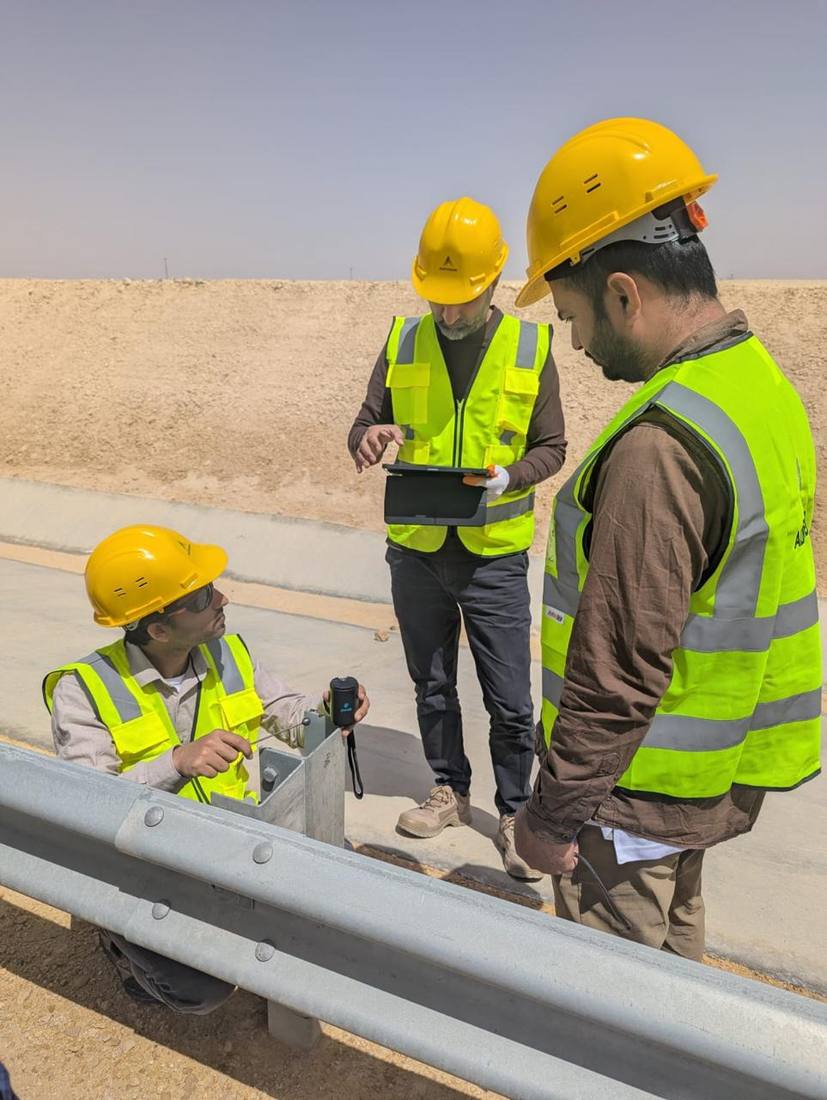
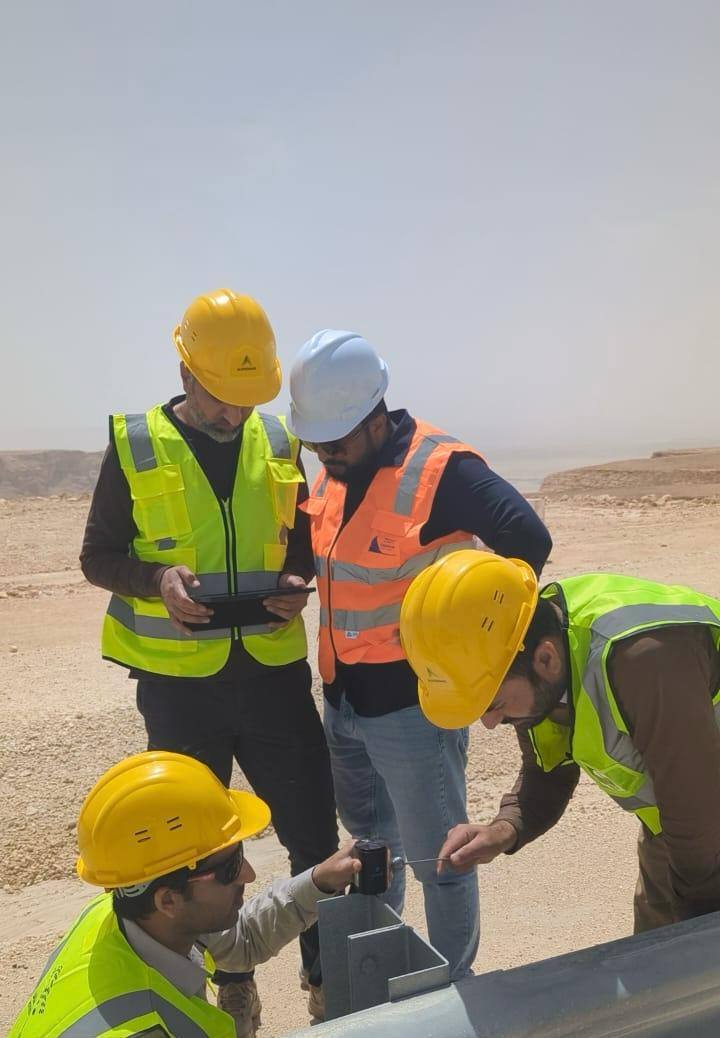
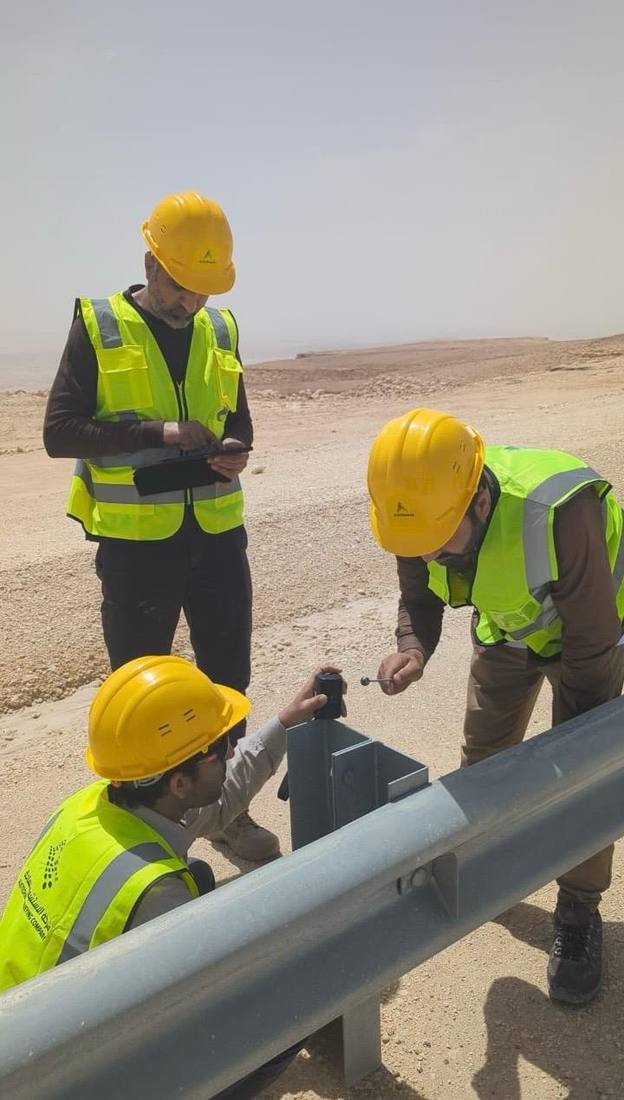
A calibrated velocity sensor was mounted at the head of each guardrail post, providing a fixed reference point from which the post's dynamic response to an impulse load could be recorded.
Controlled Impulse & Velocity Capture
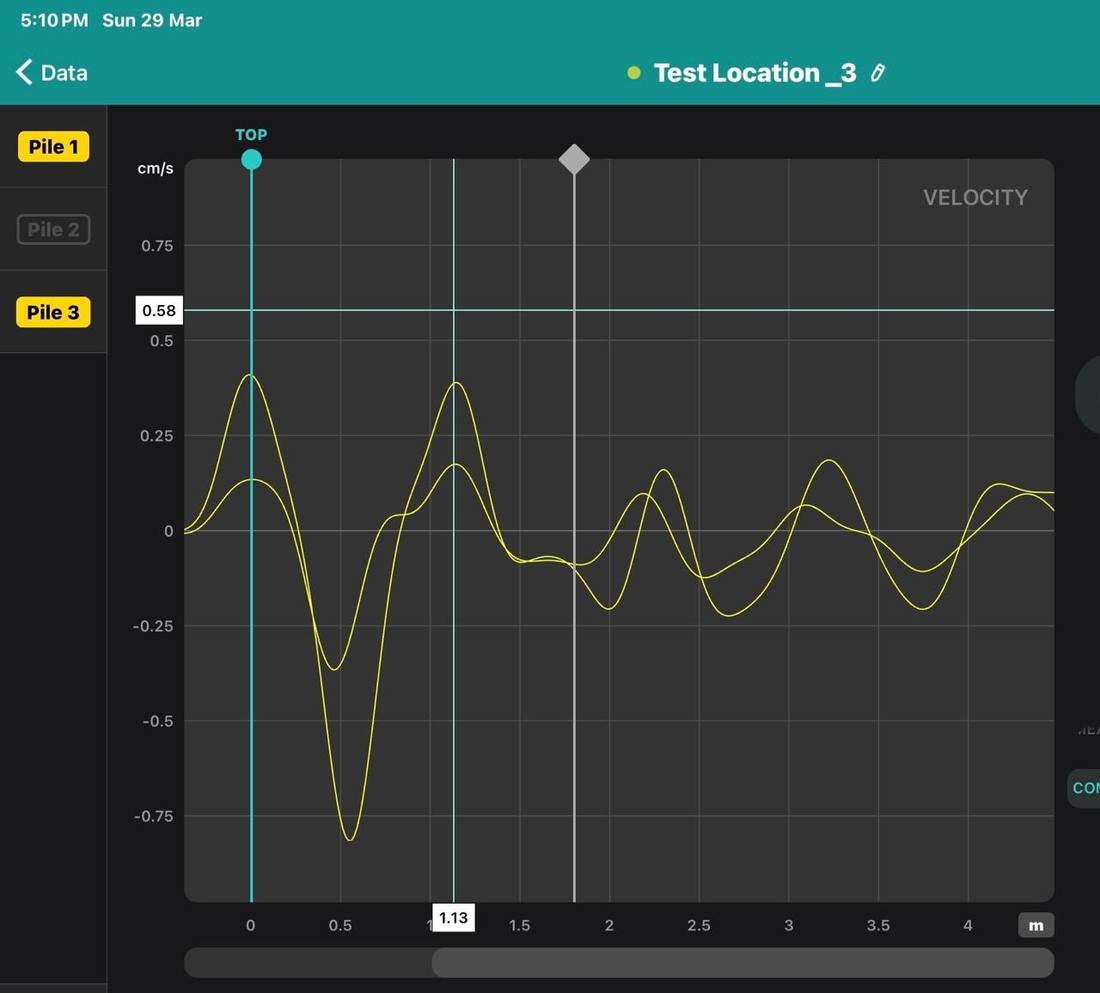
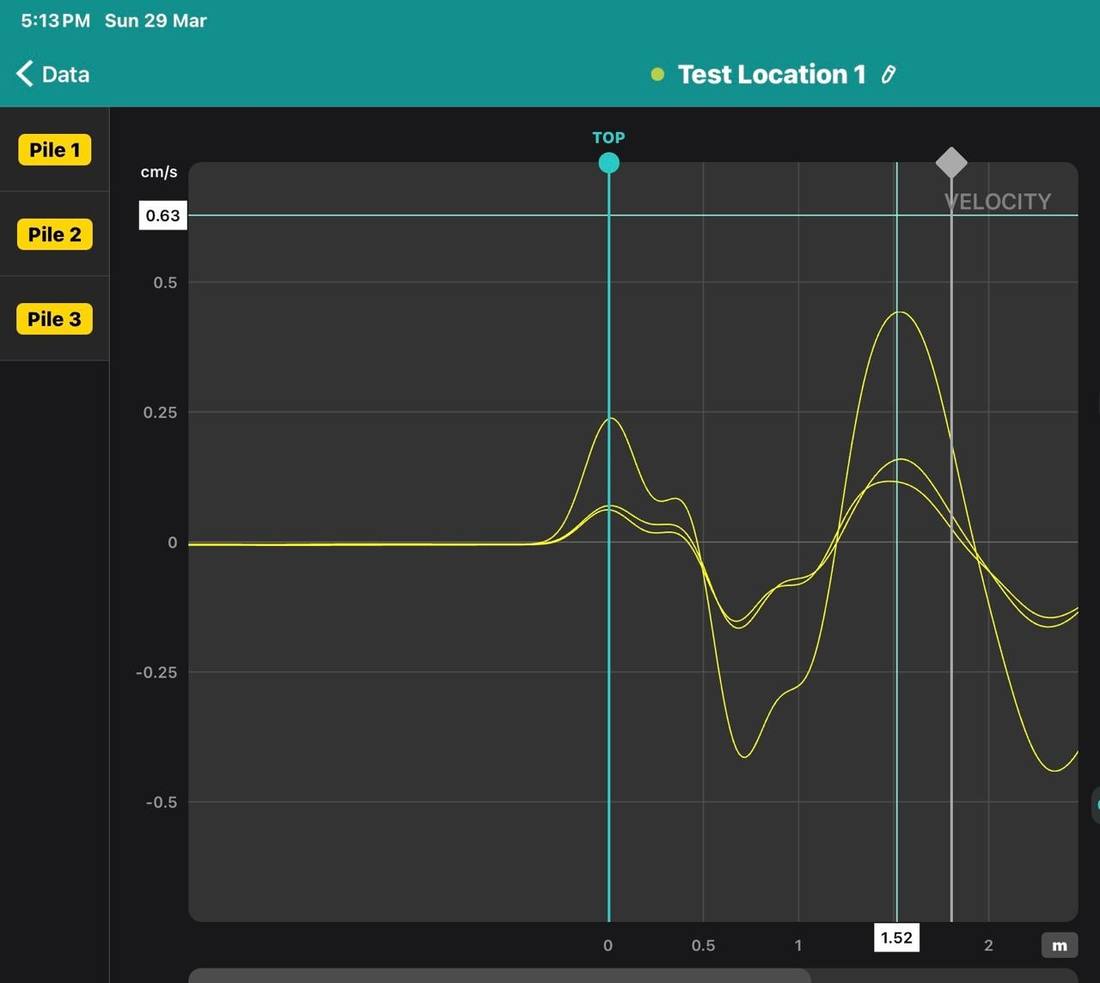
A controlled impulse was applied to each post, and the resulting velocity-time response was captured through the sensor and logged in real time on a tablet-based acquisition unit, recording the post's behavior in centimeters per second against elapsed wave travel distance.
Multi-Channel Comparison per Post
Each test location captured up to three channels per post (logged as Pile 1, Pile 2, and Pile 3 in the field software), allowing direct comparison of wave reflection behavior across repeat strikes on the same post to confirm result consistency before moving to the next location.
Reflection Analysis for Embedment Depth
The velocity waveform for each post was analyzed for the characteristic reflection signature marking the post toe — the point at which the embedded length terminates in the ground. A clean, well-defined toe reflection at the expected depth indicates a properly embedded, structurally continuous post; an early, irregular, or absent reflection flags a potential embedment or structural defect requiring follow-up.
Site-Wide Reporting
Results from all 550 posts were compiled into a single dataset referencing each test location, with individual waveform records retained for any post requiring closer engineering review.
Testing Outcome
All 550 guardrail posts were tested and produced identifiable toe reflections consistent with their specified embedment depth, confirming structurally sound installation across the network. Multi-channel comparison at each test location showed consistent, repeatable waveform behavior, supporting confidence in the result for every post without requiring physical excavation at any location.
Test locations showing any deviation in reflection timing or waveform shape were flagged individually in the dataset for the client's engineering team to review, allowing targeted follow-up only where the data indicated it was warranted — rather than blanket re-inspection of the full network.
Deliverables
Project Timeline
Field data capture across all 550 posts was completed in 7 days, covering the full roadway alignment around Six Flags Qiddiya City ahead of the park's opening to the public.
Why This Mattered for a Giga-Project Opening
Six Flags Qiddiya City opened as the first major operating anchor of the wider Qiddiya entertainment destination, with roadway and perimeter safety systems needing to be verified and signed off under genuine schedule pressure ahead of a fixed public opening date. A non-destructive, quantitative test method that could clear 550 posts in a single week — without excavation, without disrupting the roadway, and without relying on subjective visual judgment — was the only practical way to deliver that assurance on time.